
Product Liability & Certification
CISG and the Turkish Law
The provisions of CISG are applied before other international law legislations and the parties can bring their international trade disputes before Turkish judicial authorities.
Product Liability & Certification
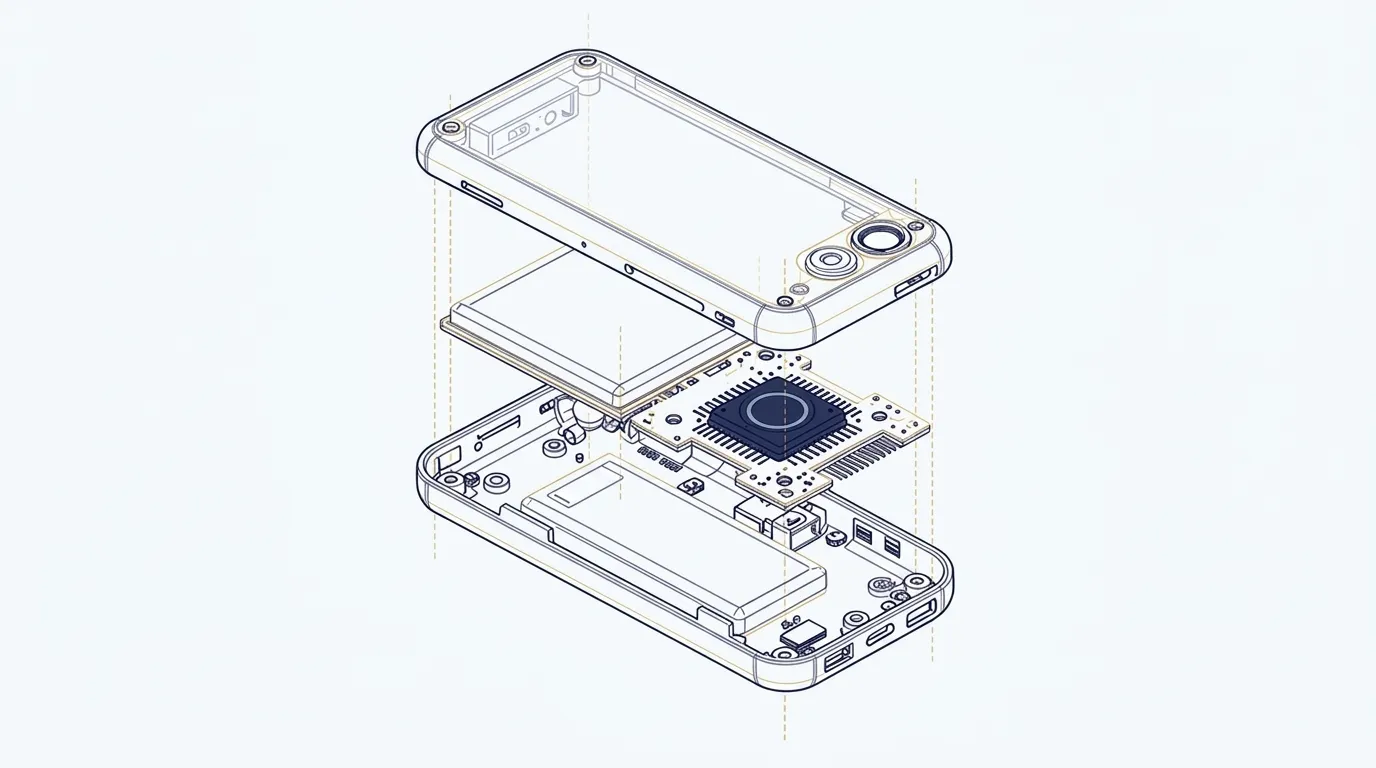
The convergence of hardware and software in a hyper-connected world has fundamentally redefined the meaning of product safety. A product is no longer judged safe solely on the basis of its condition at the moment it leaves the factory. Today, cybersecurity has become one of the most dynamic and liability-generating elements of product liability law — an obligation that persists for the entire commercial life of a product.
Driven by the European Union’s Cyber Resilience Act (CRA) and the modernised Product Liability Directive (PLD), and directly relevant to aligned legal systems such as Turkey’s Product Safety and Technical Regulations Law (No. 7223), contemporary product safety law has crystallised a single binding principle: “Security throughout the product’s lifecycle is not a commercial choice — it is a legal obligation.”
This article examines the new legal framework from both a public law (regulatory compliance) and private law (civil liability) perspective, using the paradigm case of a connected medical device to illustrate the concrete legal consequences for manufacturers, importers, and distributors operating in the EU and Turkish markets.
Traditional product liability law evaluated a manufacturer’s responsibility primarily by asking: Was the product safe when it was placed on the market? If the answer was yes, the manufacturer’s obligation was largely considered fulfilled. In the analogue era, this approach was defensible. A refrigerator does not become legally defective because new refrigerators are built differently a decade later.
Products with digital elements are categorically different. A software-integrated device, a smart IoT sensor, or a connected medical instrument exists within an evolving threat landscape. Consider the implications:
The new legal framework across the EU and Turkey explicitly acknowledges this reality. For products with digital elements, the manufacturer’s liability is coextensive with the product’s useful life. The invoice date is not the liability cut-off date.
The public law dimension encompasses the mandatory rules that state authorities enforce to protect public health, safety, and security in the marketplace. For manufacturers and importers, non-compliance triggers consequences that are entirely independent of whether any individual consumer has yet been harmed.
Under the CRA framework, products with digital elements must satisfy defined cybersecurity benchmarks from the design stage onwards and carry CE marking to legally access the EU market. Cybersecurity is no longer a distinguishing feature or a premium offering — it is a market access prerequisite. This means:
Turkey’s Law No. 7223 on Product Safety and Technical Regulations adopts the same foundational approach, requiring that products placed on the Turkish market meet the applicable technical standards — increasingly incorporating cybersecurity requirements as digital integration deepens.
Manufacturers are actively obligated — not merely permitted — to report cybersecurity vulnerabilities and actively exploited security incidents to the relevant national competent authorities (national CSIRTs and CERTs; in Turkey, TR-CERT/USOM). This is not a passive paperwork exercise:
A manufacturer who discovers a vulnerability and delays reporting — whether to avoid commercial embarrassment, protect sales, or manage PR — is not merely in breach of a technical regulation. That delay creates direct legal exposure in any subsequent civil litigation.
Market surveillance authorities hold broad powers over non-compliant digital products, including:
These sanctions apply regardless of whether any consumer has suffered harm. The regulatory violation is sufficient. For importers and distributors, liability is not limited to the manufacturer’s actions — placing a non-compliant product on the market creates its own enforcement exposure.
The private law dimension governs the rights of individual consumers and third parties to seek financial compensation for harm caused by a product’s cybersecurity failures. The modernised PLD has radically strengthened this framework.
For decades, software occupied an ambiguous position in product liability law — often excluded from the definition of “product” as an intangible service or intellectual property. The modernised PLD has eliminated this distinction entirely. Standalone software and digital elements integrated into physical hardware are explicitly and unambiguously classified as “products” under the Directive.
The consequences of this reclassification are significant:
Under strict liability, the claimant does not need to prove that the manufacturer was negligent, careless, or aware of the defect. The burden of proof shifts dramatically:
The manufacturer’s good intentions, resource constraints, or commercial pressures are not relevant to liability determination. If the product was defective, the manufacturer is liable.
The following circumstances will, in most jurisdictions applying the modernised PLD framework, render a product legally defective:
In a significant departure from traditional product liability law, the modernised PLD explicitly extends compensable damage beyond physical injury and property loss:
The practical significance for litigation: a single cyberattack exploiting a product vulnerability can simultaneously generate personal injury claims, data protection claims, privacy claims, and business loss claims — all against the same manufacturer.
Recognising the inherent information asymmetry between large manufacturers and individual claimants, the modernised framework introduces important procedural protections:
No sector illustrates the intersection of public regulatory compliance and private strict liability more clearly — or with higher stakes — than connected medical devices.
A manufacturer produces a smart, internet-connected medical device — a connected insulin pump or a remote cardiac monitoring implant — that continuously monitors a patient’s vital parameters and automatically adjusts treatment dosages. The manufacturer becomes aware of a critical firmware vulnerability but delays releasing a patch due to validation and approval timelines.
Medical devices are subject not to the general CRA horizontal framework but to the Medical Device Regulation (MDR) as the applicable sectoral legislation — the most stringent public law framework in EU product regulation. The manufacturer is legally mandated to:
Failure to patch a known, critical vulnerability triggers: mandatory Field Safety Corrective Action (FSCA), regulatory reporting obligations, potential CE suspension, and possible criminal referral of responsible individuals under national implementations of the MDR.
A threat actor exploits the unpatched vulnerability. The device is compromised. The patient’s dosage settings are remotely altered, causing severe physical harm or death. The patient’s sensitive medical data is exfiltrated.
The manufacturer did not launch the attack. The manufacturer did not intend harm. Under strict product liability, this is irrelevant. Because the manufacturer failed to maintain lifecycle cybersecurity — leaving a known vulnerability unpatched — the product is legally defective. Consequently:
The new legal framework creates distinct but interconnected obligations across the entire product supply chain:
Turkey’s Law No. 7223 on Product Safety and Technical Regulations establishes a framework closely aligned with EU product safety directives, requiring manufacturers, importers, and distributors to ensure that products placed on the Turkish market are safe, compliant with applicable technical standards, and subject to recall where safety concerns arise.
Layered over this general framework, the Law No. 7545 on Cybersecurity introduces sector-specific obligations for critical infrastructure operators — including energy, health, and finance — with administrative fines reaching tens of millions of Turkish Lira and criminal sanctions for serious violations. Manufacturers supplying these sectors face the most stringent compliance environment in the Turkish market.
Turkey’s general tortious liability framework under the Turkish Code of Obligations, combined with the precedent-setting effect of EU law in closely watched jurisdictions, provides a fully functional basis for product liability litigation arising from digital product cybersecurity failures. Turkish courts are increasingly receptive to expert-led technical evidence in such claims, and the alignment of Turkish product safety law with the EU framework makes cross-border litigation strategy increasingly coherent.
The digital transformation of product markets has converted product liability from a one-time compliance exercise into a continuous, ongoing legal obligation. Manufacturers who treat cybersecurity as an IT department concern, rather than a core legal risk management priority, do so at significant financial and reputational peril.
The consequences of non-compliance are no longer theoretical. Regulatory fines are being issued. Civil claims are being filed. And under strict liability, the absence of fault is no defence.
istlegal Attorneys at Law advises manufacturers, importers and distributors on cybersecurity compliance, product safety law and product liability under EU and Turkish law, and represents claimants harmed by defective digital products.
This article is for general information only and does not constitute legal advice.
Insights
Product Liability & Certification
The provisions of CISG are applied before other international law legislations and the parties can bring their international trade disputes before Turkish judicial authorities.

Product Liability & Certification
How employer and manufacturer liability interact when defective industrial machinery or equipment causes a workplace accident in Turkey, including recourse chains and corporate risk management.
IT & Technology Law
Evidence preservation, notification duties and communication strategy: the steps to take in the first days after a data breach is detected.
Contact
Choose the route that fits your need.