Product Liability & Certification
CISG and the Turkish Law
The provisions of CISG are applied before other international law legislations and the parties can bring their international trade disputes before Turkish judicial authorities.
Product Liability & Certification

A workplace accident is often treated as a compensation dispute between an employee and an employer. When the accident involves a defective press, an unguarded cutting machine, faulty lifting equipment or inadequate protective gear, however, the dispute becomes a multi-party liability chain involving the manufacturer, importer, seller, maintenance contractor and employer. This article summarises, from the corporate side (employers, manufacturers, suppliers, insurers), how the two liability regimes operate together under Turkish law.
Three claim lines can open at the same time:
A workplace accident claim against an employer is therefore also the starting point of a product liability strategy against manufacturers and suppliers.
The employer’s liability rests on the protective duty in the Turkish Code of Obligations (Law No. 6098, art. 417) and the general obligations in the Occupational Health and Safety Law (Law No. 6331). Employers must assess risks, provide suitable equipment, train staff and maintain supervision.
Compensation typically covers:
Courts base fault and loss calculations on expert reports. Amounts covered by SGK are offset against what the employee can claim from the employer, so the Institution’s recourse claim and the employee’s claim must be considered together.
Where a product defect contributed to the accident, the manufacturer’s exposure is examined under three headings:
For machinery placed on the market, the Machinery Safety Regulation, the CE conformity process and Law No. 7223 on Product Safety and Technical Regulations define the key duties. A CE mark and declaration of conformity do not automatically exempt a manufacturer, but the conformity file is one of the core pieces of defense evidence.
The legal basis on which an employee may claim against a manufacturer depends on the facts. Because the applicability of consumer legislation to equipment used for commercial or professional purposes can be contested, general tort provisions (Code of Obligations, art. 49 et seq.) and contractual defect provisions are typically assessed together.
Loss is allocated according to fault. Three basic scenarios arise:
In practice, an allegation of employee “carelessness” is rarely a sufficient defense on a machine without safety devices or one whose safeguards can be bypassed, because protection against foreseeable human error is part of safe design. The technical condition of the machine therefore becomes central in the expert examination.
Where several persons are liable for the same harm, the Code of Obligations provisions on multiple tortfeasors (arts. 61-62) apply: liable parties may be jointly liable toward the employee, while the allocation between them is resolved through recourse in the internal relationship. An employer planning to recover compensation from a manufacturer, importer, seller or maintenance contractor should assess from the outset:
Needle-stick injuries, defective protective equipment and medical device-related bodily harm in healthcare facilities fall into the same chain. Whether a healthcare worker’s infection is treated as a workplace accident or an occupational disease is determined separately: infections contracted in the working environment are generally occupational diseases, while sudden exposures such as bodily-fluid splashes call for an accident notification. Where protective equipment (masks, gowns, gloves) or a device was defective, claims against the manufacturer may also arise.
This article is for general information only and does not constitute legal advice. Seek legal support for your specific case.
This article is for general information only and does not constitute legal advice.
Insights
Product Liability & Certification
The provisions of CISG are applied before other international law legislations and the parties can bring their international trade disputes before Turkish judicial authorities.
Product Liability & Certification
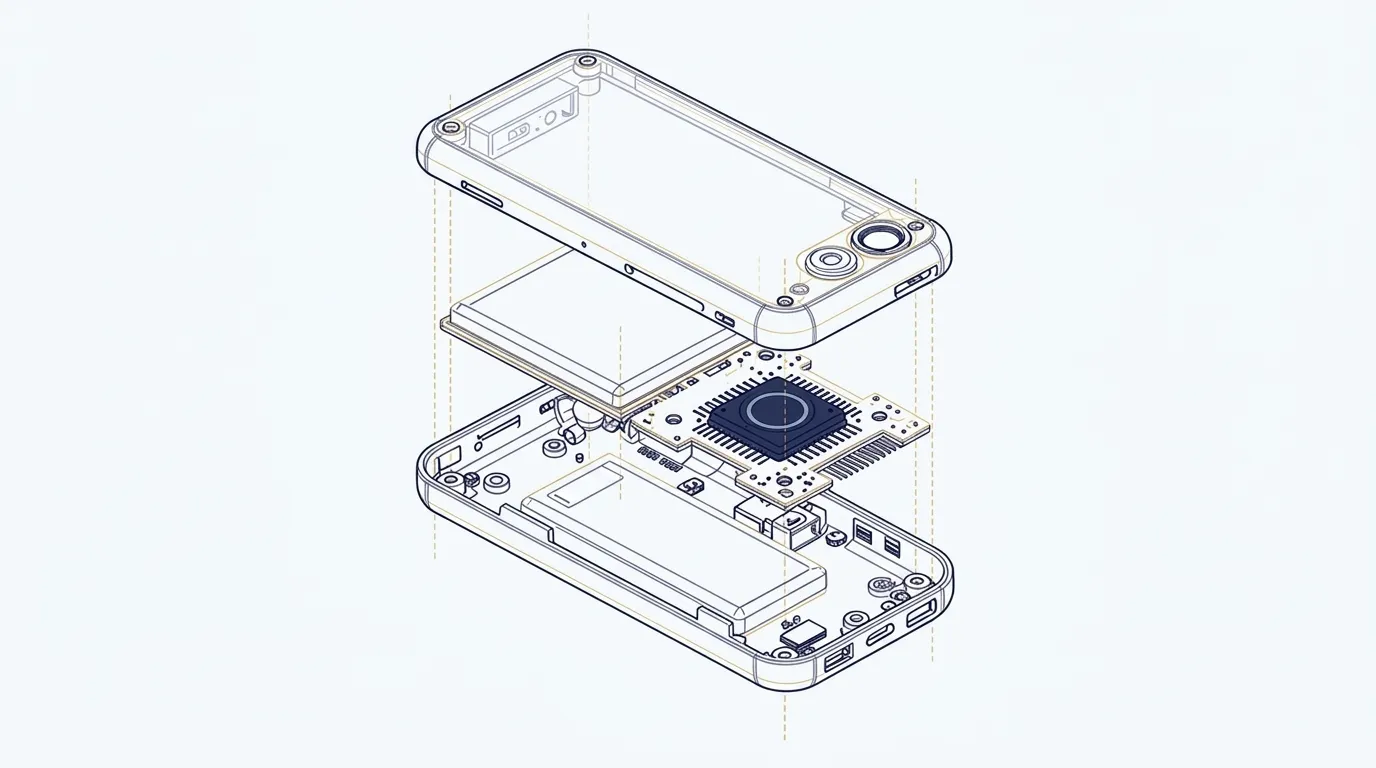
Under the EU CRA and PLD, cybersecurity failures in digital products trigger strict liability. Manufacturers face ongoing legal obligations for the product's entire lifecycle.

IT & Technology Law
Evidence preservation, notification duties and communication strategy: the steps to take in the first days after a data breach is detected.
Contact
Choose the route that fits your need.